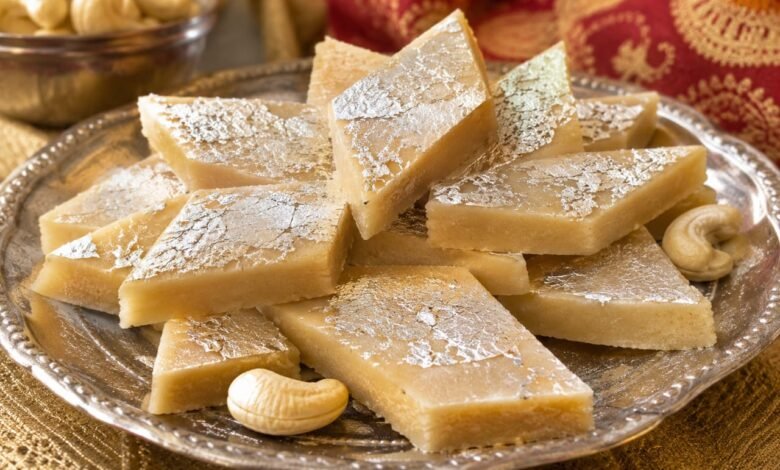
If you enjoy rich, nutty desserts that are simple yet elegant, this Kaju Katli Recipe is a wonderful treat to make at home. This traditional Indian sweet is prepared with finely ground cashews, sugar, water, and a little ghee to create smooth, delicate pieces with a naturally rich cashew flavor.
Also known as Kaju Barfi, Kaju Katli is especially popular during Indian festivals, family celebrations, and special occasions. Its beautiful diamond shape and soft, melt-in-your-mouth texture make it look like something from a traditional Indian sweet shop.
The good news is that you do not need complicated equipment or hard-to-find ingredients. With a little attention to the cashew powder and sugar syrup, you can prepare homemade Kaju Katli with a smooth texture and delicious flavor.
What Is Kaju Katli?
Kaju Katli is a traditional Indian confection made primarily from cashew nuts and sugar. The cashews are ground into a fine powder, combined with cooked sugar syrup, and stirred over low heat until the mixture forms a soft dough.
Once the dough is slightly cooled, it is gently kneaded, rolled into a thin sheet, and cut into small diamond-shaped pieces. Some versions are decorated with edible silver leaf, known as varak, for a beautiful festive finish.
Why You’ll Love This Kaju Katli Recipe
- Simple ingredients: Made with cashews, sugar, water, and a little ghee.
- Rich cashew flavor: The natural taste of cashews is the star of this traditional sweet.
- Beautiful presentation: Diamond-shaped pieces look elegant on a dessert platter.
- Perfect for celebrations: A lovely homemade treat for festivals, holidays, and family gatherings.
- Easy to customize: Add cardamom or rose water for a delicate aroma.
Ingredients You’ll Need
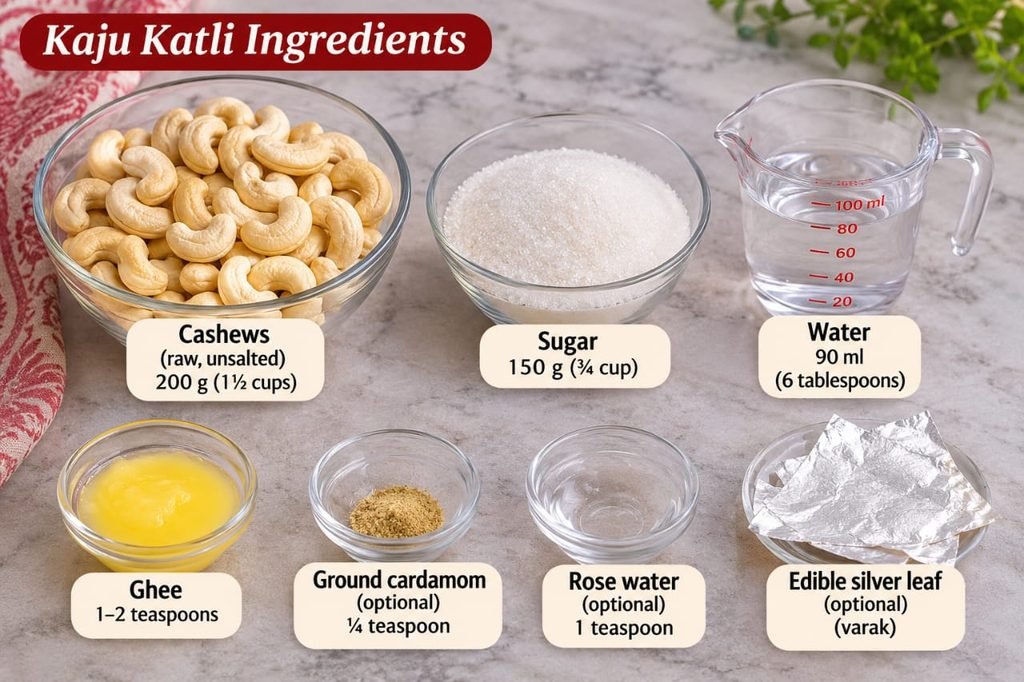
This recipe uses simple ingredients to make a traditional batch of homemade cashew fudge.
- 1 1/2 cups (200 g) raw unsalted cashews: Use fresh cashews at room temperature. They should be completely dry before grinding.
- 3/4 cup (150 g) granulated white sugar: Creates the sweetness and structure of the Kaju Katli.
- 6 tablespoons (90 ml) water: Used to prepare the sugar syrup.
- 1 to 2 teaspoons ghee: Adds a delicate richness and helps keep the dough manageable.
- 1/4 teaspoon ground cardamom or 1 teaspoon rose water (optional): Adds a gentle aromatic flavor. Choose one or leave both out.
- Edible silver leaf (optional): For the traditional decorative finish.
- A little extra ghee: For greasing the parchment paper or work surface.
How to Make Kaju Katli
Step 1: Prepare the Cashews
Make sure the cashews are at room temperature and completely dry. If they have been refrigerated, allow them to sit out until they reach room temperature.
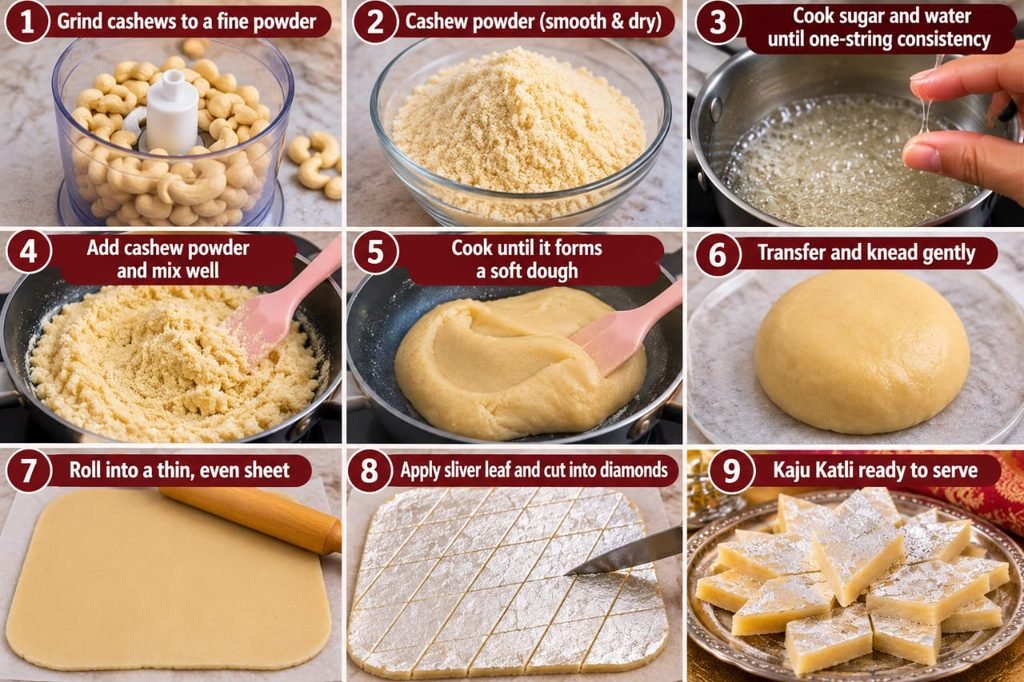
Place the cashews in a clean, completely dry grinder or food processor. Pulse in short bursts until they become a fine powder.
Avoid running the machine continuously. Cashews contain natural oils, and excessive grinding can turn the powder into a sticky paste.
If you notice larger pieces, pass the powder through a fine sieve and briefly grind the remaining coarse pieces. Set the cashew powder aside.
Step 2: Prepare the Sugar Syrup
Add the sugar and water to a heavy-bottomed saucepan or nonstick pan. Place it over medium heat and stir gently until the sugar dissolves.
Allow the mixture to come to a steady boil. Continue cooking until it reaches a one-string consistency. This is the traditional stage used for making Kaju Katli.
To check the consistency safely, place a small drop of syrup on a cool plate and allow it to cool briefly. When cool enough to handle, check whether it forms a thin thread when gently pulled between your fingers. Never touch boiling syrup because it can cause serious burns.
If you use a candy thermometer, the one-string stage is approximately 230°F to 234°F (110°C to 112°C).
Step 3: Add the Cashew Powder
Reduce the heat to low. Gradually add the ground cashew powder to the hot sugar syrup while stirring continuously with a silicone spatula or wooden spoon.
Mix thoroughly to prevent dry pockets or lumps from forming. Keep the heat low and continue stirring as the mixture begins to thicken.
Step 4: Cook Until a Soft Dough Forms
Add the ghee and optional cardamom or rose water. Continue stirring until the cashew mixture becomes thick, smooth, and begins to pull away from the sides of the pan.
This stage usually takes several minutes, depending on the pan and heat level. Avoid cooking it for too long, because an overly dry mixture can produce hard or crumbly Kaju Katli.
To check whether it is ready, place a very small amount on a cool plate. Let it cool enough to handle, then gently roll it between your fingers. It should form a soft ball without sticking excessively.
Step 5: Cool and Knead the Mixture
Turn off the heat and transfer the mixture onto a lightly greased sheet of parchment paper or a clean greased work surface.
Let it cool for a few minutes until it is warm and comfortable enough to handle. Do not wait until it becomes completely cold, because the dough will be harder to knead.
Lightly grease your hands with ghee and gently knead the warm mixture until it becomes smoother and more uniform.
If the mixture feels slightly dry or crumbly, knead it gently while it is still warm. Avoid adding large amounts of liquid, as extra moisture can change the texture and storage life.
Step 6: Roll the Kaju Katli
Place the dough between two sheets of parchment paper. Use a rolling pin to roll it into an even sheet approximately 1/4 inch (6 mm) thick.
Try to keep the thickness consistent so the finished pieces look neat and have a similar texture.
If you are using edible silver leaf, carefully place it over the surface and gently press it down while the sheet is still slightly warm.
Step 7: Cut into Diamond Shapes
Allow the rolled cashew sheet to cool completely until firm enough to cut cleanly.
Using a sharp knife or pizza cutter, first make diagonal lines in one direction, then make diagonal cuts in the opposite direction to create traditional diamond-shaped pieces.
Carefully separate the pieces and arrange them on a serving plate.
Tips for Perfect Kaju Katli
- Use dry cashews: Moisture can make the powder clump and affect the final texture.
- Grind in short pulses: This prevents the cashews from releasing too much natural oil.
- Sift the powder: Removing larger pieces helps create a smoother sweet.
- Watch the sugar syrup: Reaching the correct consistency is one of the most important steps.
- Keep stirring: Continuous stirring after adding the cashews helps prevent lumps and uneven cooking.
- Do not overcook: Remove the mixture when it forms a soft dough. Cooking too long can make the finished pieces hard.
- Knead while warm: The dough is easier to smooth and shape before it becomes completely cool.
- Roll evenly: An even sheet makes cutting and serving much easier.
Common Kaju Katli Problems and How to Fix Them
Why Is My Kaju Katli Sticky?
A sticky mixture usually means it needs a little more cooking. Return it to the pan over low heat and stir continuously until it thickens and begins to leave the sides of the pan.
Check a small cooled portion before removing it from the heat again. It should form a soft ball without sticking excessively.
Why Did My Kaju Katli Become Hard?
The mixture may have been cooked for too long, causing too much moisture to evaporate. Next time, remove it from the heat as soon as it forms a soft, non-sticky dough.
It is also important to roll the dough while it is still warm and avoid leaving it uncovered for too long.
Why Is My Cashew Mixture Grainy?
The cashews may not have been ground finely enough, or the mixture may need a little more kneading while warm. Sifting the cashew powder before cooking can help create a smoother result.
Why Is My Kaju Katli Oily?
This often happens when the cashews are over-ground and release their natural oils. Always use short pulses and stop as soon as the nuts become a fine powder.
Why Does the Mixture Crumble When I Roll It?
The mixture may have become too dry or cooled completely before kneading. If it is still warm, gently knead it with lightly greased hands. If it is already cool and crumbly, return it to the pan with a few drops of water and gently warm it until it becomes workable again.
Easy Variations
Cardamom Kaju Katli
Add 1/4 teaspoon ground cardamom to the mixture for a classic Indian dessert aroma.
Rose-Flavored Kaju Katli
Add 1 teaspoon rose water for a delicate floral note. Avoid adding too much liquid, as it can affect the texture.
Traditional Silver Kaju Katli
Decorate the rolled sheet with edible silver leaf before cutting it into diamond shapes. Make sure the silver leaf is food-grade and intended for edible use.
Plain Homemade Kaju Katli
Skip the optional flavorings and silver leaf to enjoy the simple, rich flavor of cashews and sugar.
How to Store Kaju Katli
Allow the pieces to cool completely before storing them. Place them in a clean, airtight container and keep them in a cool, dry place away from direct sunlight and moisture.
For the best texture and flavor, enjoy homemade Kaju Katli within about 5 to 7 days when stored properly. If your kitchen is warm or humid, refrigerate the sweets in an airtight container.
When refrigerated, let the pieces sit at room temperature briefly before serving so they soften slightly.
Frequently Asked Questions
Is Kaju Katli the same as Kaju Barfi?
They are closely related names for the same popular Indian cashew sweet. Kaju Katli is traditionally cut into diamond shapes, while barfi can refer to many varieties of Indian milk, nut, or flour-based sweets.
Can I make Kaju Katli without ghee?
Yes. You can omit the small amount of ghee or use a little neutral plant-based oil to grease your hands and parchment paper. The flavor and texture may be slightly different.
Can I make Kaju Katli without a food processor?
A small dry grinder or spice grinder can work. Grind the cashews in small batches using short pulses. The important thing is to create a fine powder without allowing the nuts to turn oily.
How do I know when the sugar syrup is ready?
The traditional method is to look for one-string consistency. A cooled drop of syrup should form a thin thread when gently pulled between your fingers. A candy thermometer can also help; the target is approximately 230°F to 234°F (110°C to 112°C).
Can I make Kaju Katli ahead of time?
Yes. Kaju Katli is a convenient make-ahead sweet. Prepare it, allow it to cool completely, and store the pieces in an airtight container until you are ready to serve.
Is Kaju Katli gluten-free?
Traditional Kaju Katli is naturally made without wheat flour. Check the ingredient labels of any packaged decorations or flavorings you use if you need to avoid gluten completely.
Can I freeze Kaju Katli?
It is possible to freeze it in an airtight, freezer-safe container with parchment paper between the layers, although the texture may change slightly after thawing. For the best texture, fresh preparation or short-term airtight storage is preferable.
Final Thoughts
This Kaju Katli Recipe brings one of India’s most loved traditional sweets into your home kitchen. With just cashews, sugar, water, and a little ghee, you can make delicate diamond-shaped pieces that are rich, nutty, and wonderfully satisfying.
Take your time with the sugar syrup, avoid over-grinding the cashews, and stop cooking as soon as the mixture forms a soft dough. These small details make a big difference in the final result.
Serve your homemade Kaju Katli at celebrations, share it with family and friends, or enjoy a piece whenever you want a special homemade treat.